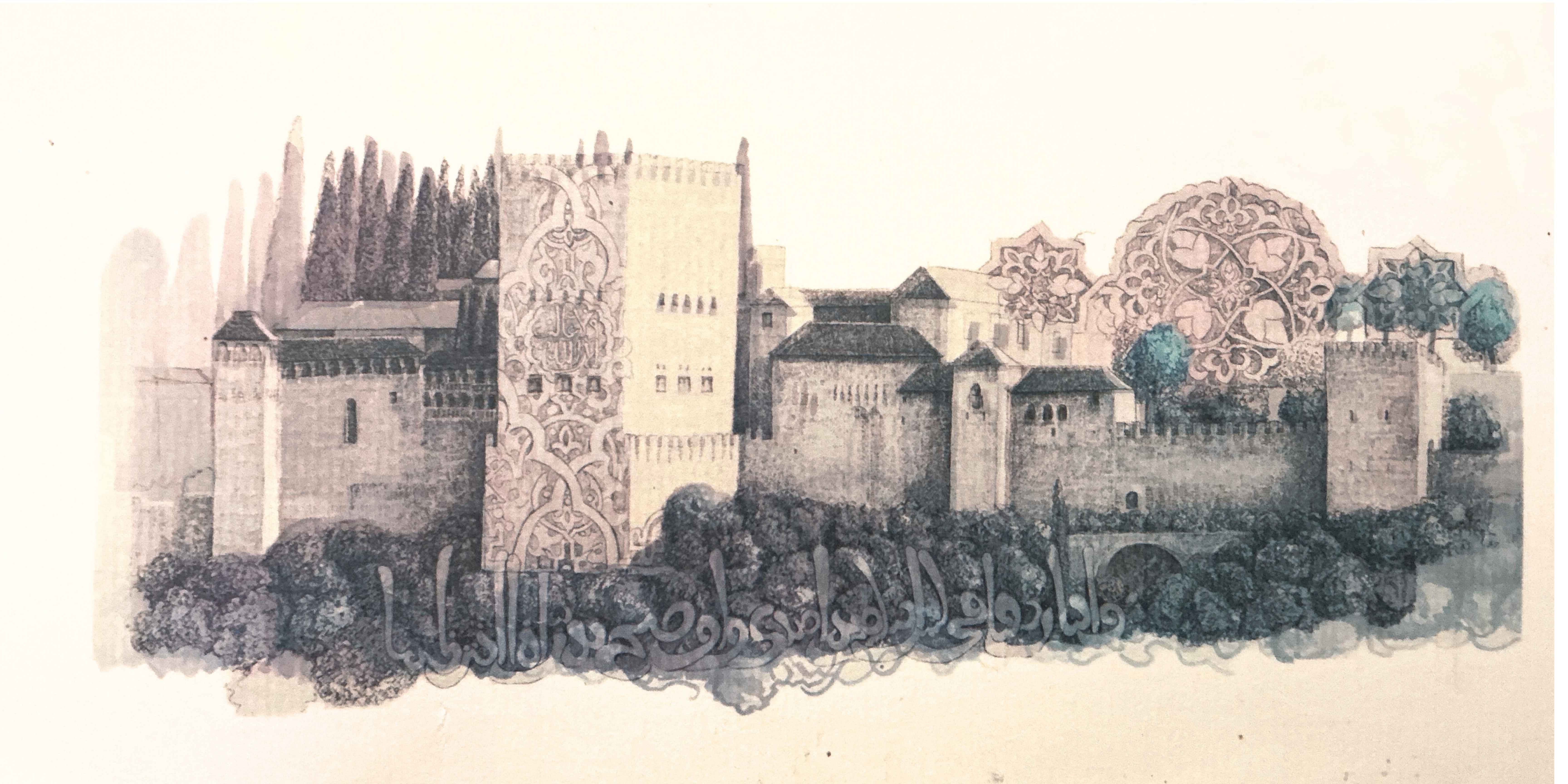
Chorrohumo_nasrid_story
md /gateway-strategy /the-market-story
Molino⺢Practice
Master Codebase Guidebook
Markdown + HTML Dev-Docs Renderer - Frontend Client Module
Default Index
Open README.md
Root: README.mdthe-market-storyShow sidebarShow beta tools
⬆ Parent folder📁 images📝 chorrohumonasridstudy
H1The Many Lives of a Mountain of Smoke
H2An Atmospheric Study of a Nasrid-Era Chorrojumo — Granada, 14th Century
A recreational historiological exercise: separating the documented legend of Mariano Fernández Santiago "Chorrojumo" (1824–1906) from the atmospheric fabric of his world, then weaving that fabric backward through time to imagine the same spirit — the same instincts for commerce, story, and human connection — alive in the silk markets, caravanserais, and mountain roads of Nasrid Granada, when the Alhambra was young and the Silk Route still flowed through Iberia.
H2I. The Historical Anchor: Chorrojumo of Sacromonte
H3What We Know
Mariano Fernández Santiago, known universally as "Chorrojumo" — a contraction of chorro de humo (jet of smoke) — was born in Ítrabo around 1824 and died in Granada on 10 December 1906.[^2^][^4^] The nickname came from his trade as a blacksmith; the forge smoke that clung to him inspired the poetic moniker that would eventually eclipse his given name entirely.[^2^][^14^]
His life changed in 1868 when the painter Mariano Fortuny, visiting Granada on his honeymoon, encountered three Roma men singing at their forge. Fortuny was captivated by one figure in particular — dark-skinned, magnetic, commanding — and persuaded him to pose in an anachronistic "goyesco" costume: wide-brimmed hat, frilled shirt, sash, and boots.[^2^][^7^] The portrait, now in the Casa de los Tiros, launched a legend. Chorrojumo so loved the image that he adopted the costume as his daily attire, proclaimed himself "Prince of the Gypsies" and "Lord of the Forests of the Alhambra," and abandoned the forge forever.[^4^][^9^]
H3What He Actually Did
| Activity | Description | Income Model |
|---|---|---|
| Storytelling | Narrated tales of the Alhambra to tourists, borrowing liberally from Washington Irving's Tales of the Alhambra | Tips and set fees per group |
| Photographic modeling | Posed with visitors for photographs; competitors soon copied his costume | Per-session payment |
| Postcard sales | Sold postcards bearing his portrait in traditional dress | Direct merchandise sales |
| Social mediation | Acted as patriarch and dispute-settler among Sacromonte clans; "respected for authority and good judgment when quarrels arose between clans" | Social capital, protection payments |
| Guiding | Escorted visitors through the Alhambra grounds, improvising histories | Negotiated fees |
He died at 82, nearly blind, "chuleado by competitors who dressed like him and stole his business," collapsing from a cerebral hemorrhage while ascending the Paseo de la Alhambra — the same path he had walked thousands of times.[^4^] His son succeeded him as the second Chorrojumo; the figure disappeared after 1947 but lives on as one of the "cabezudos" (giant heads) in Granada's Corpus Christi procession.[^2^]
H3What This Tells Us About the Type
Chorrojumo was not merely an entertainer. He was a nodal figure — a human junction where commerce, performance, hospitality, and social authority converged. He understood before anyone else in his community that the Alhambra's romantic aura was a commodity, that foreign visitors would pay not just for information but for atmosphere, for the feeling of having been initiated into something ancient and secret. He was, in modern terms, an experience designer operating within a pre-industrial economy of attention.
The fact that he emerged from the forge is symbolically significant. Blacksmiths in Roma communities have always occupied a position of special respect — working with fire and metal, creating tools that enable all other trades.[^1^] The forge was where the community's material infrastructure was born; Chorrojumo simply recognized that the community's immaterial infrastructure — its stories, its image, its mystique — could be forged too.
H2II. The Imaginary Character: A Nasrid-Era Chorrojumo
H3Name and Identity
We shall call him Yusuf al-Hadidi — "Yusuf the Smith" — though his family and close associates might use a nickname born of some childhood trait or memorable deed. He is in his late forties, weathered but vigorous, with the muscular forearms of a man who has worked metal since boyhood and the observant eyes of one who has learned to read faces, measure intentions, and calculate value in a glance.
He belongs to a community of itinerant metalworkers and craftsmen whose ancestors followed the trade routes from the East — through Persia, Armenia, Anatolia, and North Africa — arriving in al-Andalus centuries before the Nasrids, possibly even contributing to the construction of the great monuments whose stories he now sells.[^36^] His people have no single name for themselves in this era; they are known by their trades — hadidin (smiths), qayyarin (tinkers), sullamin (ladder-makers, a metaphor for those who bridge worlds) — and by their habit of appearing where needed, then vanishing until the next season.
H3The Core Paradox
Like his 19th-century echo, Yusuf is simultaneously rooted and nomadic. His family's cave-dwelling on the slopes of Valparaíso (not yet called Sacromonte) is home — warm in winter, cool in summer, invisible to tax collectors and draft officers.[^10^] But his work takes him daily into the beating heart of Granada's medina, and his trade connections extend from the Alpujarra silk villages to the port of Almería, from the funduqs of the Alcaicería to the caravanserais of Córdoba and beyond.
He is, in essence, a connector — between city and mountain, between local and foreigner, between the visible economy of goods and the invisible economy of information, protection, and social credit.
H2III. Setting the Scene: Nasrid Granada, c. 1350
H3The City at Its Zenith
When the traveler Ibn Battuta visited Granada in 1349–1350, he called it "the metropolis of Andalusia and the bride of its cities."[^85^] He found a city of roughly 50,000 souls — modest by the standards of Damascus or Cairo, but extraordinarily dense with commerce, learning, and artistic refinement.[^61^] The Sultan Yusuf I (r. 1333–1354) was beautifying the Alhambra; the Madrasa Yusufiyya, al-Andalus's first public university, had just opened its doors; and the city's markets were stocked with goods from three continents.[^88^]
Granada in this era occupies a unique structural position. It is the last Muslim kingdom in Iberia, surrounded by Christian Castile to the north and west, buttressed by the Mediterranean to the south, and connected by sea and mountain pass to North Africa. This precarious geopolitical position makes it not a backwater but a funnel — one of the last places where the intellectual, artistic, and commercial currents of the Islamic world can flow freely into Europe, and vice versa.
H3The Commercial Geography
| District | Function | Key Features |
|---|---|---|
| Bib-Rambla | Main public square and daily market | Fresh produce, livestock, public announcements, executions, festivals; the "sand gate" by the Darro river[^18^][^19^] |
| Alcaicería | Royal silk and luxury goods market | 200 shops behind guarded gates; tax collection point for silk; Genoese, Venetian, and Maghrebi merchants[^31^][^34^] |
| Zacatín | Clothing and textile street | Tailors, shoemakers, dyers, second-hand clothes; the commercial spine connecting Bib-Rambla to Plaza Nueva[^30^] |
| Corral del Carbón / Funduq al-Jadida | Caravanserai for foreign merchants | Only surviving Nasrid funduq; warehouse, inn, and trading hall combined; owned by the sultan's wives[^45^][^52^] |
| Great Mosque (Aljama) | Religious and social center | Zirid-era foundation near the Alcaicería; hub of legal, educational, and commercial activity[^73^] |
| Albaicín | Residential quarter and artisan workshops | Fajalauza pottery, metalwork, leather; originally Zirid citadel area[^40^] |
| Alhambra | Royal citadel and administrative center | Palaces, barracks, mosque, baths, artisan workshops; self-contained city of ~2,000[^74^] |
| Alpujarra villages | Silk production region | Mulberry cultivation, silkworm raising, raw silk processing; "the Country of Silk"[^53^] |
H3The Flow of Goods
Granada's economy rests on several intersecting trade streams. Silk is the most prestigious: the Alpujarra villages of Juviles, Válor, Ugíjar, Trevélez, and Pórtugos produce raw silk of quality exceeding Egyptian and Syrian competitors, exported via Genoese merchants from the Alcaicería.[^53^] Spices arrive by sea through Málaga and Almería — pepper, ginger, cinnamon, saffron, nutmeg — sold by the attarin (perfumers and spice merchants) in specialized souqs near the Great Mosque.[^17^] Agricultural products flow from the Vega plain — sugar (a luxury commodity), cereals, olives, fruit. Craft manufactures — leather, pottery, metalwork, taracea (wood inlay) — circulate both locally and for export.
The Genoese dominate maritime commerce; the Jews serve as interpreters, physicians, tax collectors, and intermediaries; and a constant flow of Maghrebi merchants, Maghrebi scholars, and Andalusi refugees from Christian territories keeps the city culturally vital.[^29^]
H2IV. The Character's Activities: Daily, Weekly, Seasonal, Yearly
H3Daily Rhythms
Yusuf's day is governed by the five prayers, the market bells, and the seasonal light. He rises before dawn, when the Albaicín is still cool and the only sounds are the muezzin's call and the clatter of early bakers.
| Time | Activity | Location | Network Involved |
|---|---|---|---|
| Pre-dawn (Fajr) | Prayer at neighborhood mosque; informal gathering with other early risers — merchants, craftsmen, watchmen — exchanging news from the night | Local mosque or oratory | The Dawn Circle — loose association of morning regulars |
| Morning | Forge work: repairing tools, shoeing mules, fabricating metal fittings for carts, lamps, or household items; often interrupted by neighbors bringing broken items | Family cave-workshop on Valparaíso slopes | Direct customers, apprentices |
| Mid-morning | Descent to the city: passes through Bib-Rambla, notes prices and arrivals, greets regular contacts | Bib-Rambla square | Market informants, fellow tradesmen |
| Noon (Dhuhr) | Prayer at the Great Mosque; this is a key social moment — the mosque courtyard is where business partnerships are formed, disputes aired, and introductions made | Great Mosque (Aljama) | The Mosque Circle — wider network of merchants, scholars, officials |
| Afternoon | Commerce proper: visits to the Alcaicería to check silk prices; consultations at the Corral del Carbón with incoming caravan merchants; visits to regular clients who need his intermediary services | Alcaicería, Corral del Carbón, funduqs | Caravan leaders, foreign merchants, local shopkeepers |
| Late afternoon (Asr) | Tea and negotiation in a funduq courtyard or a client's shop; this is when deals are sealed, partnerships renewed, and information traded over mint tea and almond pastries | Various funduqs | Close business associates |
| Evening | Return ascent to Valparaíso; stops at the bathhouse (hammam) if the day has been particularly dusty or strenuous; dinner with family; evening storytelling, music, or quiet accounting by lamplight | Hammam, family cave | Family, household |
| Night (Isha) | Final prayer; sometimes a second round of social calls for those who conduct sensitive business after dark — debt collection, dispute mediation, arrangements that require privacy | Private homes, rooftops | The Night Circle — trusted confidants |
H3Weekly Patterns
| Day | Focus |
|---|---|
| Friday (Jumu'a) | Attends the great sermon at the Aljama mosque; this is the peak social and business day — everyone who matters is present, dressed in their best, visible and approachable. Afternoons are for serious negotiations. |
| Saturday–Sunday | Intensive craft work at the forge; the city markets are quieter, so this is when accumulated repair work gets done and apprentices receive hands-on training. |
| Monday–Thursday | Active commerce and intermediation; these are the days for visiting the Alcaicería, meeting caravans, traveling to nearby villages for raw materials or deliveries. |
H3Seasonal Rhythms
| Season | Activity | Economic Focus |
|---|---|---|
| Spring (March–May) | Peak caravan season begins; preparations for the great summer fairs; mulberry leaves appear in the Alpujarra, silkworm cultivation begins | Silk trade activation; tool and equipment manufacturing for agricultural season |
| Summer (June–August) | Intense heat slows midday commerce; business shifts to early morning and late evening; some merchants travel north to Córdoba or Seville to escape the worst heat and access Christian markets | Inter-regional trade; mediation for travelers |
| Autumn (September–November) | Harvest of silk cocoons; grape and olive harvests in the Vega; peak commercial activity before winter closes mountain passes | Silk processing and trading; agricultural surplus distribution |
| Winter (December–February) | Mountain passes may close; commerce becomes more local; time for maintenance, training, storytelling, and social bonding; some family members travel to coastal cities for warmer weather work | Local repair work; hospitality services for winter travelers; preparation for spring |
H3Yearly Cycle
| Month | Key Event | Character's Role |
|---|---|---|
| Muharram | Islamic New Year; renewal of contracts and partnerships | Mediates partnership renewals; witnesses agreements |
| Rabi' al-Awwal | Mawlid (Prophet's birthday); increased religious and social activity | Participates in processions; hospitality for visiting scholars |
| Ramadan | Month of fasting; altered schedule — nights become days | Evening social gatherings (suhoor and iftar hosting); night markets; peak storytelling season |
| Shawwal (Eid al-Fitr) | Breaking the fast; gift-giving; family reunions | Distributes gifts to network members; reconciles disputes before the holiday |
| Dhu al-Hijjah (Eid al-Adha) | Feast of Sacrifice; pilgrimage season | Some family members may depart for Hajj; he manages their affairs and properties |
H2V. Income Sources: Direct, Indirect, and Administrative
H3Direct Income
| Source | Description | Typical Payment Form |
|---|---|---|
| Forge work | Metal repairs, tool fabrication, horseshoeing, architectural fittings | Cash (silver dirhams), occasionally barter (food, cloth, services) |
| Intermediation fees | Connecting buyers and sellers; brokering silk, spice, or craft transactions | Percentage of transaction (typically 2–5%); sometimes fixed fee |
| Guiding and storytelling | Escorting foreign merchants or travelers through the city; narrating Alhambra's history and legends | Voluntary gifts; negotiated fees; meals and hospitality |
| Translation and negotiation | Facilitating communication between Arabic, Berber, Romance, and Italian speakers | Fixed fee or percentage |
| Hospitality | Hosting travelers in family cave; providing meals, bedding, local knowledge | Room and board fees; future favors and connections |
H3Indirect Income
| Source | Description | Mechanism |
|---|---|---|
| Social credit | Favors accumulated through mediation, protection, and hospitality | Converted to preferential treatment, first access to goods, reduced prices |
| Information | Early knowledge of price movements, caravan arrivals, political changes | Sold selectively to trusted partners; exchanged for equivalent information |
| Protection arrangements | Informal guarantee of safe conduct for certain merchants in certain areas | Regular tribute payments; percentage of protected merchant's profits |
| Investment partnerships | Silent partnership in silk, spice, or craft ventures | Profit sharing (typically 1/4 to 1/3 of net profit) |
H3Administrative Methods
Yusuf keeps no written ledger — literacy is not his strength, though he can recognize names and numbers well enough to verify a contract witnessed by a professional scribe. His accounting system is mnemonic and social:
H2VI. The Character Network: Family, Helpers, Associates
The network below is organized not by formal hierarchy but by proximity of trust and regularity of interaction. Some figures are named; others represent collective types that would have existed as multiple individuals but can be understood through a single representative.
H3The Inner Circle: Family and Household
| Name/Title | Role | Relationship | Skills & Contribution | Benefit/Compensation |
|---|---|---|---|---|
| Fatima | Wife and household manager | Spouse | Manages cave-home, prepares hospitality meals, maintains social calendar, oversees female apprentices in textile work | Shared household prosperity; social standing as wife of respected man |
| Musa | Eldest son and forge apprentice | Son (16 years old) | Learning metalwork; assists with heavy labor; beginning to handle simple client interactions | Training for future independence; small share of payments |
| Aisha | Eldest daughter and record-keeper | Daughter (14 years old) | Basic literacy and numeracy; maintains informal ledger; assists with textile and ceramic decoration | Dowry accumulation; education as family investment |
| Yasmin | Younger daughter | Daughter (9 years old) | Domestic duties; apprentice to Fatima in hospitality craft | Family care; future training |
| Ibrahim | Youngest son | Son (6 years old) | Errands; learning basic tasks | Family nurturing |
| Umm al-Hadidi ("Mother of the Smith") | Matriarch and advisor | Mother (widowed, ~65) | Repository of family history and oral contracts; advises on disputes and partnerships; maintains connections with elder women in other merchant families | Respect, care, and hearing in family decisions |
H3The Right Hand: Close Business Associates
| Name/Title | Role | Origin | Function in the Network | Compensation |
|---|---|---|---|---|
| Abu Zakariya the Scribe | Document writer and legal witness | Jewish quarter (Realejo) | Writes contracts, letters, and receipts; provides legal testimony; connects to Jewish merchant networks | Per-document fees; reciprocal referral of Jewish clients needing metalwork |
| Tariq al-Sayyad ("The Hunter") | Muleteer and transport coordinator | Alpujarra village of Pórtugos | Organizes pack trains between Granada and Alpujarra; knows mountain passes, safe routes, and seasonal conditions | Percentage of transport fees; priority access to Alpujarra silk |
| Sitt al-Bahr ("Lady of the Sea") | Coastal connection | Málaga (originally Ceuta) | Receives maritime shipments; arranges coastal transport to Granada; provides news from North African ports | Commission on trans-shipped goods; hospitality in Granada |
| Yaqub the Spice-Seller | Alcaicería shopkeeper | Jewish merchant family | Fronts for some of Yusuf's intermediary deals; provides retail presence for wholesale transactions | Percentage of shared deals; access to Yusuf's foreign merchant contacts |
H3The Second Circle: Regular Collaborators
| Representative | Collective Type | Function |
|---|---|---|
| Hassan the Potter | Ceramic artisans (Fajalauza quarter) | Produces vessels for Yusuf's household and for sale through his network; Yusuf provides metal fittings for pottery and connects him to foreign buyers |
| Rafiq the Weaver | Silk weavers and textile workers | Processes raw Alpujarra silk into finished fabrics; Yusuf supplies raw materials and arranges wholesale buyers |
| The Gatekeepers | Guards and wardens of Alcaicería, funduqs, city gates | Provide access, information about arrivals and departures, and informal protection; compensated with small gifts and reciprocal favors |
| The Bath Attendants | Hammam workers (both city and Alhambra baths) | Hubs of gossip and information; they know who is in town, who is ill, who has money to spend, who is in trouble |
| The Madrasa Students | Scholars and seekers at the Yusufiyya Madrasa | Young, mobile, hungry for experience; serve as messengers, temporary assistants, and sources of intellectual prestige |
H3The Third Circle: Occasional but Important
| Representative | Type | Role |
|---|---|---|
| The Caravan Leaders (collective) | Heads of merchant caravans from Córdoba, Seville, North Africa, or the East | Major clients for hospitality, intermediation, and protection; sources of bulk goods and long-distance information |
| The Sufi Lodge Residents | Mystics and spiritual travelers in Granada's ribats | Provide spiritual legitimacy, connections to Maghrebi networks, and sometimes surprising sources of patronage |
| The Christian Traders | Merchants from Castile or Aragon operating under safe-conduct | Require discreet mediation; pay well for trusted intermediaries who can navigate both Muslim and Christian commercial customs |
| The Alpujarra Producers | Silk cultivators and processors in mountain villages | Sources of the region's most valuable export; Yusuf's transport connections make him a vital link between mountain and market |
H3The Outer Layer: The Unclassified Web
Beyond these circles lies a penumbra of relationships too varied to categorize: the olive farmer who owes a favor, the Berber soldier who once needed a blade repaired, the widow whose dispute Yusuf mediated, the child he taught to shoe a mule, the poet who once shared tea and left with a story. These relationships are not monetized but constitute the social fabric within which all monetized activity becomes possible.
H2VII. The Caravan Return: A Journey from Córdoba
The following scenario illustrates how Yusuf's network functions in practice — not as a formal organization but as a living web of mutual obligation and shared enterprise.
H3The Departure (Three Weeks Prior)
A Granada-based caravan departed for Córdoba bearing: raw silk from the Alpujarra (tax payment to the Castilian crown, as Granada is a tributary state); finished ceramics and leatherwork for the Córdoba market; a diplomatic letter from the Nasrid chancery; and four foreign merchants seeking passage north. Yusuf's role: organizing the mule train through Tariq al-Sayyad, brokering the transport contracts, and connecting the foreign merchants to the caravan leader.
H3The Return Journey (Late Autumn)
The caravan now returns, lighter in body but heavier in purse and story. The composition has changed:
| Traveler | Status | Activity on Return |
|---|---|---|
| Yusuf al-Hadidi | Caravan organizer and patriarch | Rides his mule at the front; has spent three weeks in Córdoba negotiating next season's contracts; carries a letter of introduction from a Córdoban silk merchant to a Genoese factor |
| Tariq al-Sayyad | Muleteer chief | Manages the animals; two mules were sold in Córdoba (reducing his herd); he has purchased iron tools from Córdoba's superior forges |
| Musa (Yusuf's son) | First long journey | Returned with experience; carries a small purse of his own earnings from assisting a Córdoban smith |
| Sitt al-Bahr's nephew | Coastal merchant's representative | Remained in Córdoba to arrange maritime shipment; his place is taken by a young scholar from the Madrasa who has secured patronage to study in Cairo — he travels with the caravan only as far as Málaga, where he will board ship |
| Three Córdoban merchants | New passengers southbound | Seeking Alpujarra silk and Granada's famed ceramics; Yusuf has agreed to mediate their purchases for a percentage |
| A Berber musician | Independent traveler | Met in Córdoba; pays for passage with entertainment; will perform at the evening camps |
| A widow and her child | Personal connection | The widow's husband, a metalworker, died in Córdoba; Yusuf knew him; she returns to her family in Granada with her husband's tools and savings; no fee is charged |
H3The Road Home
The journey takes five days along the Roman road through Alcalá la Real, Alcaudete, and Baena. Evenings are spent at waystations — some formal caravanserais, some informal camps. The atmosphere on the return is relaxed, almost festive: the dangerous business of the journey (bandits, tax collectors, rival caravan interference) is largely behind them. The Berber musician plays; Yusuf tells stories of the Alhambra's construction to the fascinated Córdobans; Tariq teaches Musa the subtle art of reading a mule's mood. Accounts are settled around the fire — who owes what, who has profited, who has lost, what the next season will bring.
The widow sits apart, sewing, but Yasmin (who has accompanied her mother to meet the caravan at a rendezvous point) brings her tea and learns that the woman knows a song from Fez that Fatima has never heard. By the time they reach Granada's gates, a new connection has formed — one that may yield nothing tangible or may, in three years, result in a marriage alliance, a business partnership, or a story worth a thousand dirhams.
H2VIII. Footnote: The Zirid Taifa Alternative (11th Century)
Had our character lived two centuries earlier, during the Zirid Taifa period (1013–1090), the fabric would be recognizably similar but the pattern significantly different.[^43^]
| Aspect | Nasrid Period (13th–15th c.) | Zirid Taifa Period (11th c.) |
|---|---|---|
| Political context | Last Muslim kingdom in Iberia; tributary to Castile; defensive and insular | One of many taifa kingdoms; expansive and competitive; tribute flows to Christian kingdoms (parias) |
| Commercial orientation | Funnel between Islamic world and Christian Europe; Mediterranean maritime trade dominant | Overland routes to Córdoba paramount; Córdoba is the metropole, Granada the provincial hub |
| Silk trade | Mature industry; Alpujarra production; Genoese maritime export | Nascent industry; mulberry cultivation spreading; overland transport to Córdoba for onward shipment |
| Jewish community role | Significant but constrained (post-1066 massacre, post-Almoravid purges) | Extraordinarily prominent; Samuel ibn Naghrillah as vizier and general represents peak Jewish political power[^54^] |
| Caravan routes | Granada–Málaga–Almería maritime corridor; Granada–Córdoba overland | Granada–Córdoba as primary axis; less Mediterranean direct trade |
| Clientele for guides/storytellers | International travelers (Maghreb, Italy, East); romantic tourism nascent | Primarily domestic and regional travelers; less "exotic" interest in Alhambra (which doesn't yet exist in its Nasrid form) |
| Our character's role | Connector between local and global; multilingual; cosmopolitan | More regionally focused; deeper integration with Córdoban networks; possibly more prominent role in inter-taifa diplomacy |
The Zirid-era character would likely spend more time on the road to Córdoba — a journey of political as much as commercial significance — and less time hosting international travelers. The absence of the Alhambra as a destination would shift his storytelling focus to the Albaicín fortress, the Great Mosque, and the legends of the Zirid kings themselves. The Jewish vizier's court would be a crucial node in his network, and the 1066 massacre (if he survived it) would mark a traumatic rupture in the community's social fabric.
H2IX. Visual Summary: The Character at a Glance
H3Yusuf al-Hadidi — Profile
| Attribute | Detail |
|---|---|
| Age | Late 40s |
| Appearance | Compact, muscular build; dark skin; silver-threaded beard; calloused hands; dresses in practical wool and linen, with a distinctive silver ring (his "brand") |
| Home | Cave-dwelling on Valparaíso slopes (later Sacromonte); two rooms — forge and living quarters |
| Primary trade | Blacksmith and metalworker |
| Secondary trades | Commercial intermediary, guide, storyteller, translator, hospitality provider |
| Social standing | Respected mu'allim (master craftsman); informal patriarch of his community segment; known as simsar (broker) in the markets |
| Religious practice | Observant Muslim; attends Jumu'a prayers at the Aljama; hosts Sufi travelers; respects all "People of the Book" |
| Languages | Arabic (native); Granada Romance (fluent); Berber (functional); some Italian trade vocabulary; Hebrew recognition (numbers, names) |
| Signature skill | The ability to make any stranger feel, within ten minutes, that they have known him forever |
H3The Network at a Glance
YUSUF AL-HADIDI (The Smith-Broker-Storyteller)
│
├── INNER CIRCLE (Family)
│ ├── Fatima (wife/manager)
│ ├── Musa (son/apprentice)
│ ├── Aisha (daughter/scribe)
│ ├── Umm al-Hadidi (mother/advisor)
│ └── Extended household
│
├── RIGHT HAND (Close Associates)
│ ├── Abu Zakariya (Jewish scribe)
│ ├── Tariq al-Sayyad (muleteer)
│ ├── Sitt al-Bahr (coast connection)
│ └── Yaqub (Alcaicería shopkeeper)
│
├── SECOND CIRCLE (Regular Collaborators)
│ ├── Hassan the Potter (ceramics)
│ ├── Rafiq the Weaver (textiles)
│ ├── The Gatekeepers (access)
│ ├── The Bath Attendants (information)
│ └── The Madrasa Students (messengers)
│
├── THIRD CIRCLE (Occasional Partners)
│ ├── Caravan Leaders (bulk trade)
│ ├── Sufi Lodge Residents (spiritual/patronage)
│ ├── Christian Traders (cross-border)
│ └── Alpujarra Producers (raw materials)
│
└── OUTER WEB (Unclassified Relations)
├── Favors owed and held
├── Stories shared and accumulated
├── Protection given and received
└── Reputation as living capital
H3Visual Network Map
H2X. Concluding Notes: From Smoke to Silk
The historical Chorrojumo understood something that transcends his century: people do not travel merely to see things — they travel to feel transformed, to carry home a story that elevates them in their own social world. His genius was to recognize that the forge had given him not just a skill but a persona — the smoky, dark-skinned, elemental figure from the mountain — that could be transmuted into a kind of living theater.[^2^][^4^]
Our imaginary Yusuf al-Hadidi operates from the same instinct, though the theater is different. Where Chorrojumo sold the romance of a ruined Alhambra to 19th-century Romantics, Yusuf sells the vitality of a living one — a palace still being built, a court still dispensing justice, a Silk Route still flowing with silk and saffron and the murmur of a dozen languages. His forge smoke is the same; his gift for human connection is the same; his role as a nodal figure in a network of trust and exchange is the same.
What changes is the direction of the gaze. Chorrojumo looked backward, packaging nostalgia. Yusuf looks outward and forward — connecting, facilitating, translating between worlds. Both are masters of what the economist Albert Hirschman called the "art of voice" — the ability to resolve conflicts, build coalitions, and create value through communication rather than coercion.
In the end, the study of such a character — whether anchored in the documented 19th century or imagined in the 14th — reveals something about the deep structure of pre-modern economies. Before corporations, before contracts enforced by states, before advertising and brands, there were people like this: smiths who became storytellers, mountaineers who became cosmopolitan brokers, men and women whose primary capital was not land or gold but the trust they had earned, story by story, favor by favor, year by year.
The smoke from the forge rises. The silk passes through the market. The caravan departs at dawn. And somewhere, in a cave on a hillside, a man sharpens his tools, counts his knots, and prepares to meet the day's strangers — each one a potential story, each one a potential partner, each one a thread in the vast, invisible web that makes a city like Granada possible.
This study was compiled from historical sources including Ibn Battuta's Rihla, the Tibyan of Abdallah ibn Buluggin, archaeological reports from the University of Granada's MEMOLab, the Alhambra Museum collections, and extensive research on Nasrid economic and social history. All imaginary elements are identified as such and are grounded in documented historical patterns rather than fantasy.
We use cookies to improve your experience. By continuing, you agree to our Privacy Policy.
Accept